Book: Source Code by Bill Gates
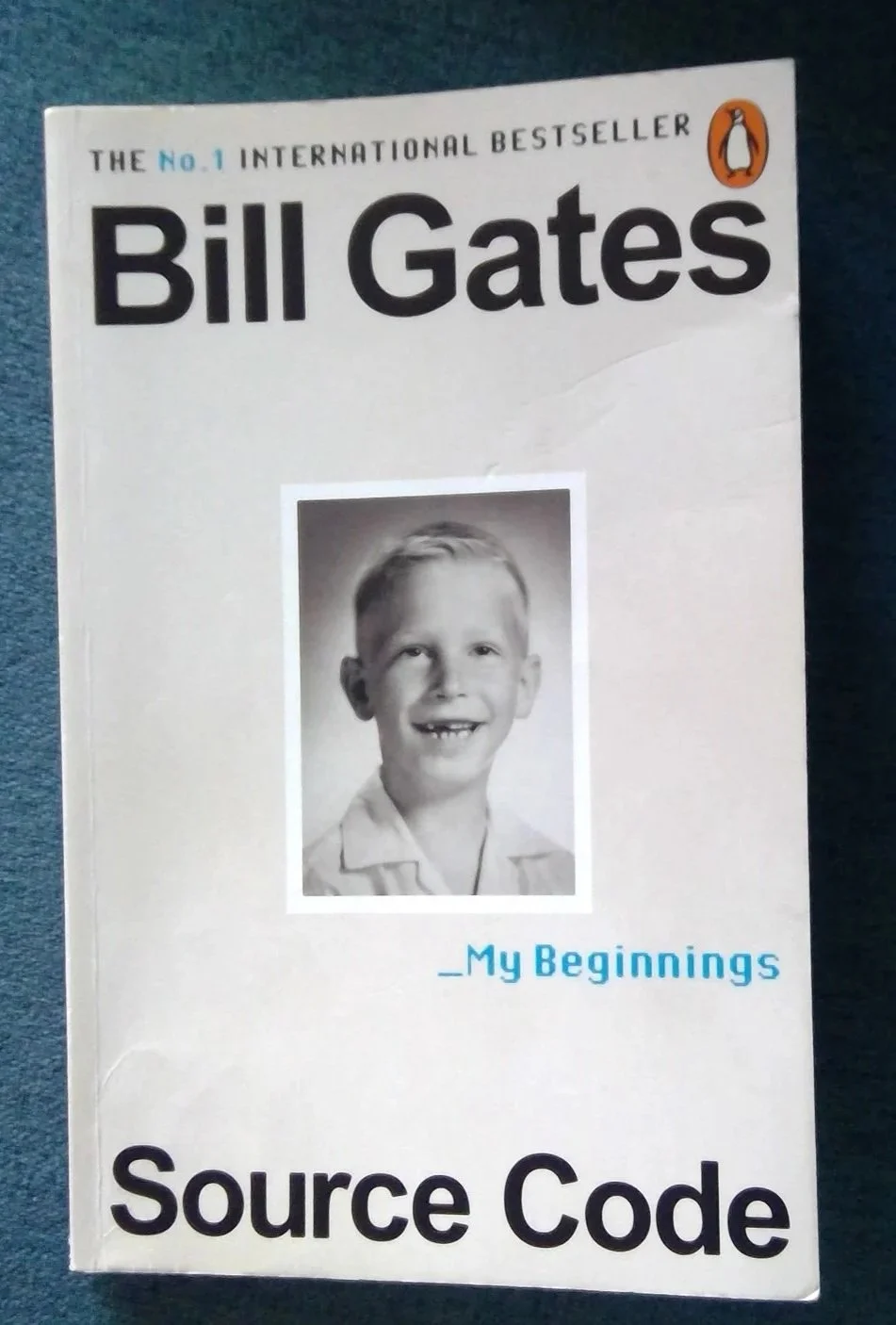
I’ve long followed Bill Gates’ career and loved the optimism of How to Avoid a Climate Disaster, so this was going to be a treat. It says something that the book is littered with tech speak and yet I was not bored once.
Talking of good books, his Mum, the educator, had a copy of my favourite book, Dale Carnegie's How to Win Friends and Influence People. She moved from volunteering to sitting on boards in the 1960s, which speaks of privilege, but also of heart. She always worked but also absolutely ruled the house with impeccable organisation. While she was of wealthy stock, Gates Snr was not and it was Mary Gates who shaped how the family were going to live their lives. Helping other people always played a part.
While in college, his dad had written an essay about a place he called Gatesland: "In Gatesland the people would understand that there are no differences between men and women except in physical makeup. Maxims like 'a woman's place is in the home' and expressions like 'male superiority' and 'man, the provider,' the weaker sex, would have no significance. Men and women would meet on exactly level terms in all endeavors... the female would be as common in the professions and business as the male, and the male would accept female entry into these fields as the normal rather than abnormal event."
When he decided the best way to make friends at school was through humour, he played the clown. He didn't want to be known as smart, and he hadn't yet identified as a nerd. Then someone decided that how he spoke was a hindrance. The school speech expert advised holding him back a year. Another expert suggested he skip a year. They didn’t know what to make of him.
A teacher decided he needed a challenge and asked the librarian for a project. He didn't want to leave that school when he moved, because he loved finding lost books and returning them to their rightful place. As someone who can’t leave a greeting card in the wrong place in a shop, I understand, but sadly don’t have his brain.
His parents decided he needed something different and paid for private schooling. Here he met his peers. Together with his new friends, he learned to programme and, through one thing and another, undertook a school project and eventually started getting paid. As a teenager, he was already creative and entrepreneurial. When recruiting, this was the early 70s, he remembered stating they were "equal opportunity employers."
Reading about the tragedy he faced, the death of his closest friend Kent Evans in a mountain-climbing accident at 17, broke my heart. They had seemed destined to build something together.
He and eventual partner, Paul Allen, wrote their first software and licensed, not sold, it to MITS, who created the first affordable home computer. Licensing rather than selling was a clever move for a teenager, for anyone, helped, no doubt, by having a lawyer as a father. Paul came up with the name, Micro-Soft, as it was then.
He writes that the invention of the microprocessor would prove to be the single most important event in his life, without which there would be no Microsoft, one of the world's most successful companies.
I enjoyed learning how they eventually wore down Steve Jobs and Steve Wozniak, the engineer behind the Apple II, and ended up writing AppleSoft for them.
There was no autism diagnosis back then; the neurodivergent diagnosis came much later. Luckily, his parents worked with their son, who thinks differently. Part of me thinks that was only possible because they could afford it. What would have happened to a child without his self-confessed white, male, American privilege, born in the 1950s?
I loved the ambition, the work ethic, the creativity and the camaraderie. The start of Microsoft is very male, but there are many sensitive males within it. There was one woman in the original band of start-up employees, possibly because she and her husband came as a team straight from university.
If I loved the start, learning about the great-grandparents onwards, I really loved the ending, where all the childhood influences came back to round this off so beautifully.